
The Deep-Rooted Meaning of a Dreamcatcher Explained
- May 31, 2024
- 7 min read

Introduction to the Meaning of a Dreamcatcher
The meaning of a dreamcatcher is rooted in a beautiful balance of protection, tradition, and spirituality. Originally crafted by the Indigenous peoples of North America, these sacred hoops were designed to act as a filter for the spirit world—trapping nightmares in their intricate webs while allowing peaceful dreams to slide down their feathers to the sleeper below.
Today, dreamcatchers remain powerful symbols of hope, safety, and mindfulness. In this guide, we will explore the timeless history of the Spider Woman, decode the sacred symbolism of feathers and gemstones, and discuss how to thoughtfully honor the cultural origins of these protective talismans.
The History and Significance of Dreamcatchers
The dreamcatcher is far more than an iconic artifact; it is a sacred piece of the rich tapestry of Native American culture. Deeply rooted in spiritual tradition, its history reflects a profound relationship between the natural world and the human spirit. To truly understand the meaning of a dreamcatcher, we must look at the tribes that first breathed life into these protective objects.
Spiritual Roots and Cultural Significance
Native American tribes of the Great Plains believed that the night air is filled with both good and bad dreams. The dreamcatcher was created to act as a spiritual filter, ensuring only positive visions reach the sleeper. While they are frequently viewed as mere home decor today, it is vital to remember that for Indigenous peoples, these are living symbols of unity, protection, and identity.
At Shokoro Handmade, crafted in our Toronto studio, we emphasize the profound importance of honoring these origins. True cultural appreciation requires us to recognize that the mass exploitation and commercial dilution of these sacred designs can be deeply hurtful to the cultures that created them.
The Legend of the Spider Woman (Ojibwe vs. Lakota)
The history of the dreamcatcher is primarily defined by two beautiful oral traditions:
The Ojibwe Legend: This story centers on Asibikaashi, the Spider Woman. As a spiritual protector of the nation—especially infants and children—she watched over her people. As the tribe expanded across the land, mothers and grandmothers began weaving intricate "spider webs" on willow hoops to serve as a proxy for her maternal protection, catching evil before it could reach the cradle.
The Lakota Legend: In this tradition, the trickster and teacher spirit Iktomi appeared in the form of a spider to a spiritual leader. As he spun a web on a willow hoop, he spoke of the cycles of life and the dual forces of good and evil. He taught that the web would catch "good ideas" and divine visions, while the negative thoughts and destructive influences would fall through the central hole and disappear completely.
The Anatomy of a Dreamcatcher: Decoding the Symbolism
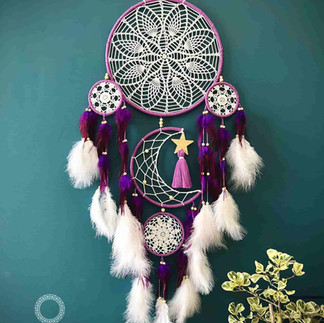
Every single component of a dreamcatcher is chosen with careful intention, turning a beautiful object into a purposeful psychological and spiritual tool.
The Hoop (The Continuous Circle of Life): The hoop serves as the foundation, traditionally shaped from willow into a circle or a teardrop. For the Ojibwe people, the circle represents the interconnectedness of all things and the continuous cycle of life—with no beginning and no end. It mirrors the eternal paths of the sun and moon, reminding us of our shared rhythm with the earth.
The Web (The Filter of the Spirit World): Intricately woven to mimic a spider’s web, the mesh is the heart of the design. Functionally, it acts as a filter: negative energy, anxiety, and nightmares become entangled in the threads, while the central opening allows peaceful dreams, gentle insights, and light to pass through smoothly to the sleeper.
Feathers (The Gentle Ladder): Feathers act as a "soft ladder" for positive dreams. Once a good dream passes through the center of the web, it gently glides down the feathers to reach the dreamer below. Representing the element of air and the breath of life, they ensure that only inspiration and peace enter your resting space.
Arrowheads (Strength and Grounding): A meaningful addition to some protective designs, arrowheads symbolize spiritual defense. With points directed toward the earth and the four cardinal directions, they ground the dreamer and ward off negative external influences.
Beads and Gemstones: Symbols of Earth and Intention
The details woven into the web carry specific, powerful intentions. A single bead often represents the spider itself—the master weaver and creator. Multiple beads can symbolize the nightmares that have been successfully caught and neutralized by the web.
At Shokoro, we believe that incorporating genuine, high-quality gemstones brings the unique, grounding energy of the earth directly into the design. Rather than using generic accents, choosing specific stones allows the user to personalize the talisman's purpose to their own life journey:
Amethyst: Woven for tranquility, deep peace, and a quieted mind before sleep.
Quartz: Integrated to amplify clarity, light, and pure intentions.
Iolite (The Viking's Compass): Chosen to help navigate transitions and find your inner direction.
Black Tourmaline : Used to bring a sense of grounding and energetic protection to a modern space.
Sapphire (Quiet Luxury): Bringing an elegant, calm, and deeply centered serenity to your sleep sanctuary.
Obsidian (The Truth Mirror): Incorporated for deep spiritual defense, reflecting away negative or deceptive energies.
Rose Quartz (The Self-Love Stone): A gentle stone that nurtures the heart space and encourages peaceful, loving dreams.
Black Onyx (Boss-Core Power): Woven into the web to anchor inner strength, resilience, and personal boundaries.
Peridot (The Evening Emerald): Used to usher in abundance, joy, and a lighthearted, restful evening.
Kyanite (The Universal Bridge): Perfect for facilitating a smooth alignment of energy and deep, connected dream recall.
Modern Significance: Appreciation vs. Appropriation
In recent decades, dreamcatchers have traveled far beyond their tribal origins, becoming a global symbol of hope. However, as they move from sacred protectors to popular decor, it is vital to practice mindful boundaries.
Beyond Decoration: Spiritual and Therapeutic Uses
While often admired for their aesthetic beauty, dreamcatchers remain functional tools for wellness. In therapeutic and healing settings, they are frequently utilized as:
Aids for Tranquility: Helping to calm an overactive mind and create a gentle evening ritual before sleep.
Psychological Anchors: Serving as a comforting visual reminder of safety, boundaries, and protection within your bedroom.
Healing Talismans: Transcending boundaries to offer quiet comfort to those dealing with restless sleep, bad dreams, or nighttime anxiety.
Cultural Appreciation vs. Appropriation
The commercialization of dreamcatchers has saturated the market with mass-produced versions that completely sever the item from its Indigenous history.
Appreciation means taking the time to learn the history, respecting the spiritual intent, and recognizing the dreamcatcher as a living piece of Native American heritage.
Appropriation occurs when the symbol is treated purely as a superficial "fashion trend" or a cheap aesthetic accessory without acknowledging, respecting, or supporting the people who carried the tradition through generations.
How to Support Indigenous Artisans
The most respectful way to welcome a dreamcatcher into your life is to ensure it comes from an authentic source. Supporting Indigenous artisans is a tangible way to preserve this sacred craft. When you purchase directly from Native American craftsmen, you are:
Preserving Living Tradition: Ensuring that the centuries-old spiritual meanings and sacred weaving techniques remain intact.
Supporting Communities: Contributing directly to the economic sustainability of Indigenous families and honoring their artistic legacy.
Ensuring Authenticity: Receiving a piece that was created with the specific prayers, traditional materials, and clean intentions that mass production can never replicate.
Creating a Mindful Space: Infusing Intention
If you are engaging in creating a dreamcatcher for personal use, it should be approached not merely as a craft project, but as a deeply personal journey of intention. Weaving a protective circle allows you to slow down and imbue the materials with your own hopes and quiet reflections.
Setting Your Focus
Before you begin gathering materials—whether a natural willow hoop, soft wrapping lace, or weaving thread—take a quiet moment to set a clear purpose. Ask yourself: Who is this protection meant for? What energy does this room need?
As you weave each knot of the web, hold that thought in your mind. By selecting genuine, high-quality gemstones that resonate with your current path—such as the soothing embrace of Kunzite or the steady grounding of Shungite—you turn the physical act of creation into a mindful meditation. Each bead, feather, and stone added becomes a physical reflection of peace, protection, or inspiration.
Frequently Asked Questions (FAQs)
Q: What is the foundational meaning of a dream catcher?
A: Originating from the Ojibwe people, dreamcatchers embody a deep spiritual significance as protective talismans. They act as a spiritual filter, capturing restless or negative energies within their web while permitting only positive, peaceful dreams to flow through to the sleeper.
Q: What was the original purpose of the design?
A: The original purpose was to protect infants and children from bad dreams and malevolent spirits. Indigenous peoples believed the night air was filled with many shifting energies. By hanging a dreamcatcher above a sleeping area where it could be touched and cleansed by the morning sun, the web would safely ensnare unfavorable thoughts before they could reach a child's mind.
Q: What happens to the bad dreams caught in the web?
A: According to traditional legends, the dreamcatcher acts as a silent guardian. While good dreams know the way and glide effortlessly down the feathers, nightmares become hopelessly entangled in the intricate web. Once the first light of dawn hits the dreamcatcher, these trapped negative energies are safely dissolved and neutralized.
Q: How do dream catchers help with sleep from a psychological perspective?
A: Beyond their cultural roots, dreamcatchers serve as a wonderful therapeutic anchor. Psychologically, they provide a visual symbol of safety and tranquility. Having a dedicated object that represents "guardianship" over your space helps soothe the subconscious mind, reduce pre-sleep anxiety, and foster a more grounded, peaceful mindset.




Conclusion
Throughout the exploration of the dreamcatcher's journey—from its sacred spiritual origins among Native American tribes to its contemporary presence around the world—we see a beautiful symbol of interconnectedness. The intricate details of its anatomy, from the winding of the hoop to the precise placement of high-quality gemstones, all carry a profound responsibility to protect and uplift.
As dreamcatchers continue to adorn our spaces, let us carry the responsibility to honor and respect the rich history they represent. By weaving an understanding of their origins into our daily lives, we can appreciate this enduring legacy of mindfulness, protection, and respect in a way that is truly meaningful.
Jewelry Infused with Healing Energy.
Best store to buy Natural Crystal and Gematone Jewelry


